Temple-Town Hierakonpolis Geoarchaeological Project 1999 – present
Regional and local changes impact this place, residents, farmland and antiquity.
Our goal is to safeguard this important living and ancient place.
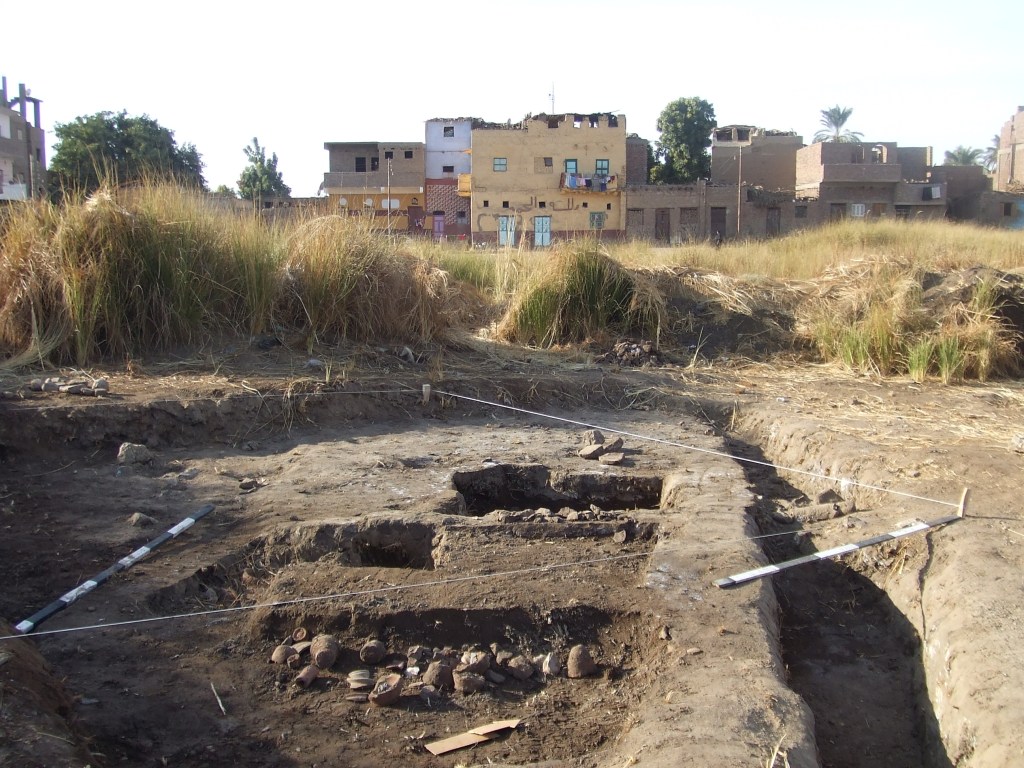
Temple-Town Hierakonpolis (2018 shallow excavations) has found ancient occupation that might parallel today’s residents, but both are at risk from rising groundwater and accumulation of salts.
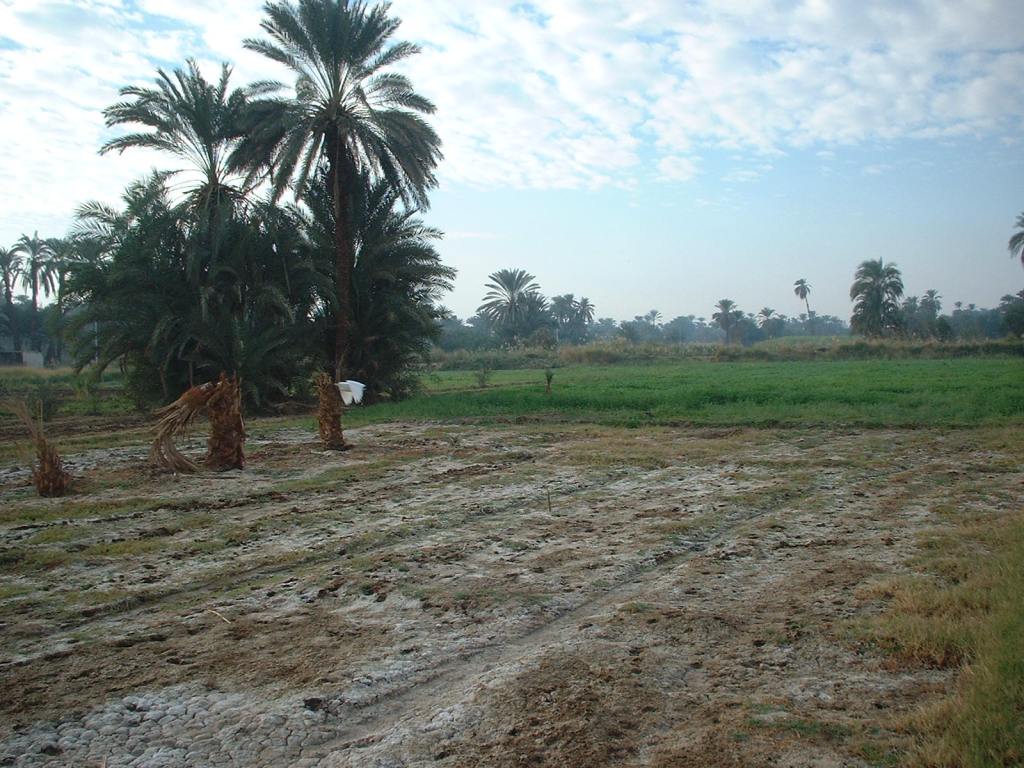
Fields east of Temple-Town Hierakonpolis
How to feed one’s family with land made barren from salts?
Many farms along the Nile have been harmed from rising groundwater and accumulation of salts. The east fields (above) were productive until 2005. Water quality and structural stability are at risk.
Houses and farmland today frame the ancient Temple-Town Hierakonpolis as if from ‘forever’ to be blessed to have the rich Nile soil (alluvium) as the major resource. This living situation accompanied the site and was known to first excavations by Quibell and Green,1897-99 when a low Nile permitted excavations to 5 m depth. Owing to groundwater, only shallow excavations to 2 m depth have been possible since 1967, Fairservis, Hierakonpolis Project.
Temple-Town Hierakonpolis has long been a barometer of salt precipitation.
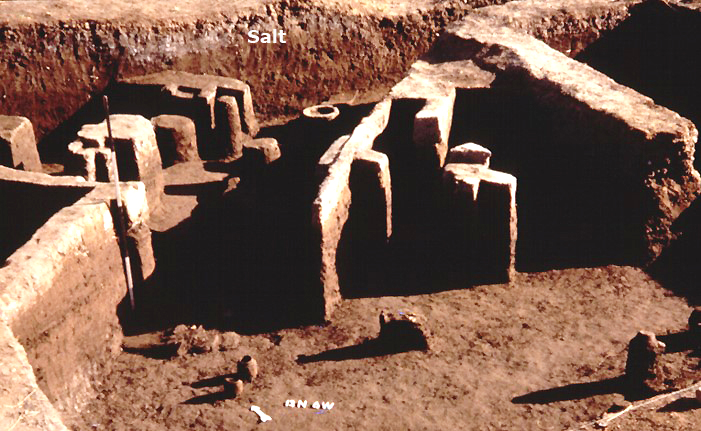
The white area is salt – see top left in photograph above, 1969 excavation.
Salt occupies the first 20-30 cm depth of the site, 1969 and surface to 10-20 cm, 2005 and continues to encrust soils and contents.
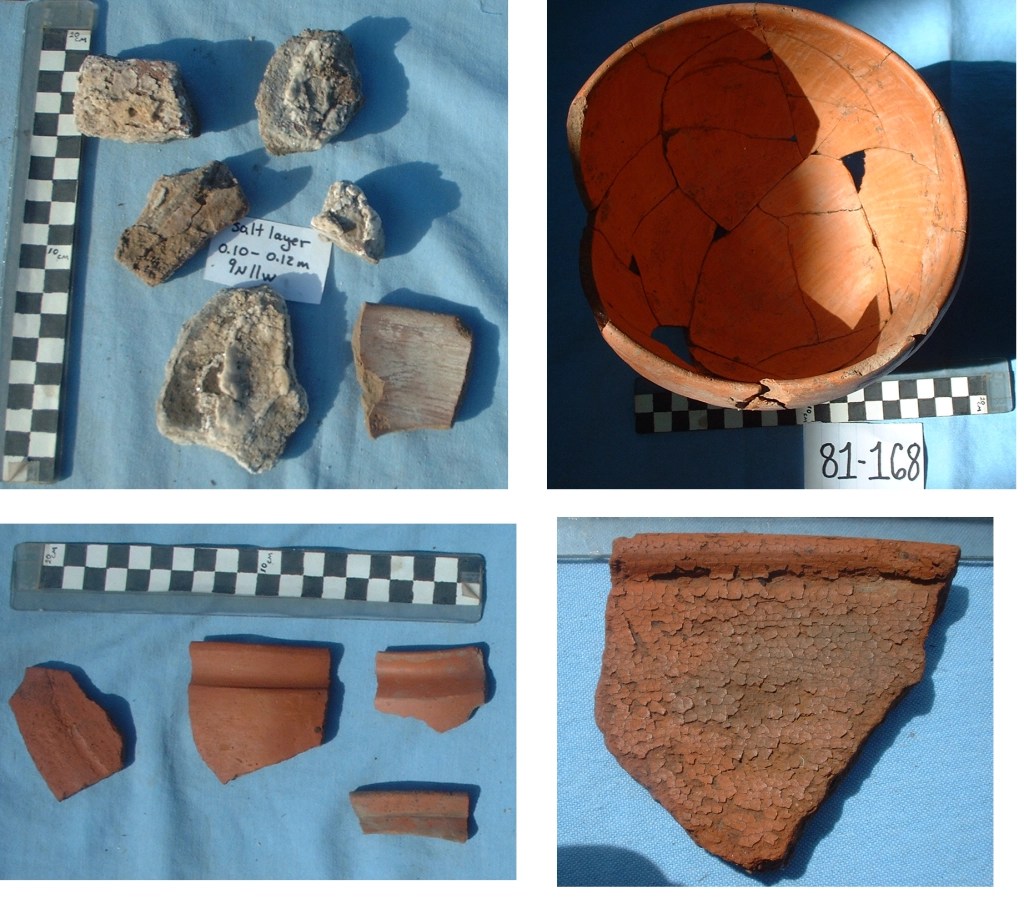
Examples of pot fragments from 2005, 10 – 20 cm depth, on upper left carry salt encrustation.
Ancient evidence often in pottery granted the site its name Kom el Ahmar, red mound (from pottery). Pots from daily life to special offerings inform all who study the past.
Salt encrustation obscures and destroys. The original surface of the vase is lost, replaced by evaporative salts in the soils. Original surface, shape, surface treatment, and fabric of the pot help identification. Recurrent pottery and other items even in the disturbed debris are clues to the past history, helping us to recognize change and lead us to ancient occupational layers, most informative. Pottery is so important because it often awards chronology, time and place, almost alive again.
 hierakonpolis.com