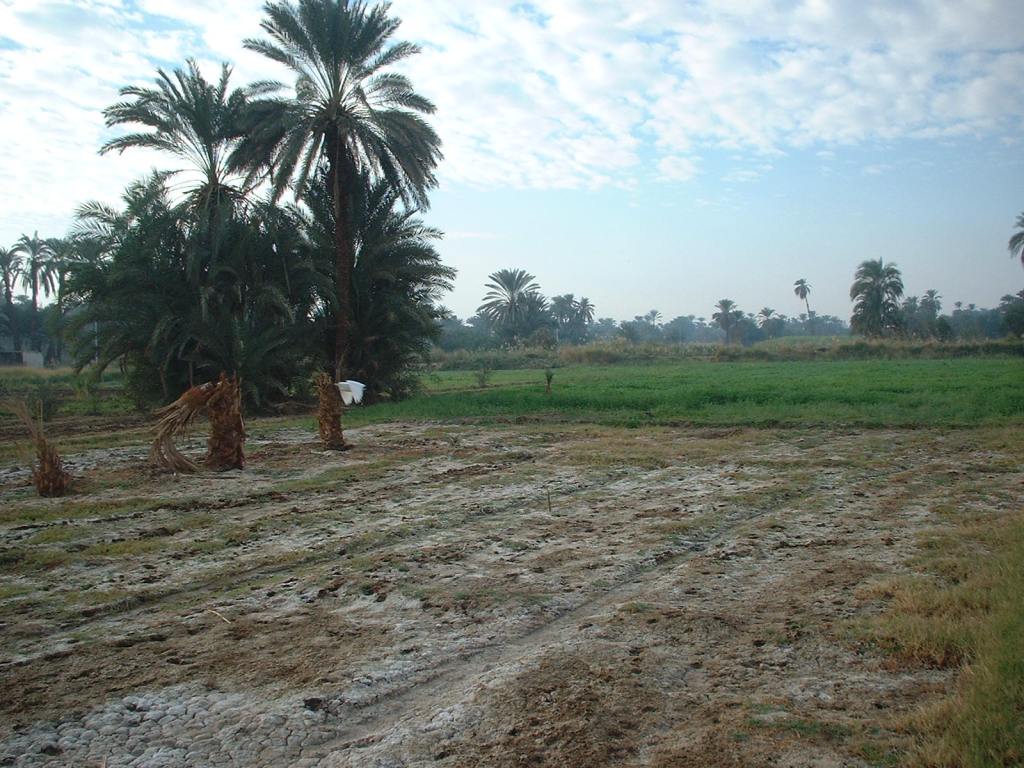
East fields of Ahmed are coated with salt since 2006.

Google Earth 11 10 2022 white fields east and southwest of Temple-Town Hierakonpolis.
More than private wells serve the residents. According to the doctor for this area, 1999, the residents have better health from chlorinated water from Edfu,19 km to the south. Widespread salinized farmland (Google Earth 11/10/2022 includes more than 20 salted fields in just our 2 km area) and potential decline in water quality surely concern all.
Excavations at Temple-Town Hierakonpolis encounter salts in the surface soils and debris.
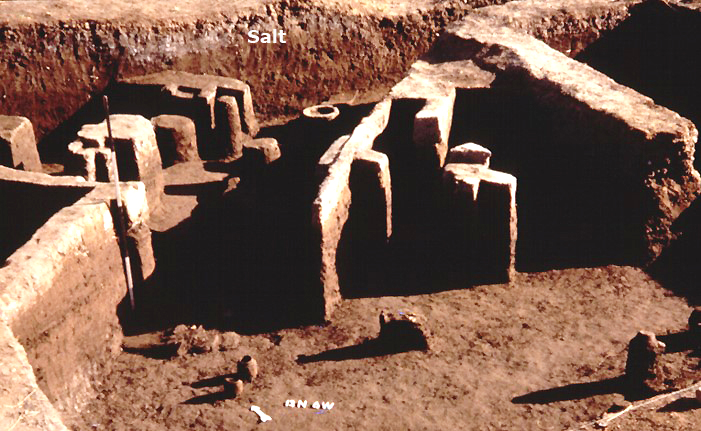
The 1967 excavations of Dr. Walters Fairservis found salts in first 30 cm depth, quadrant 13n6w.
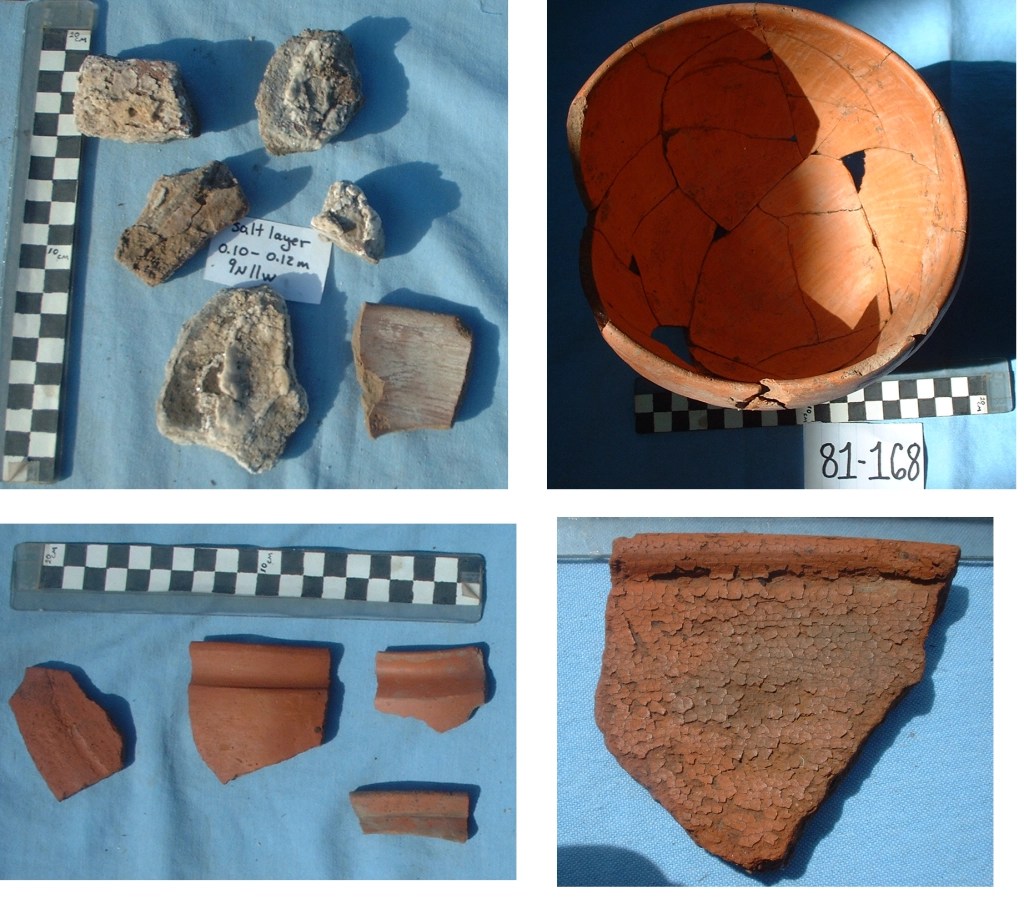
Pottery from Temple-Town Hierakonpolis (2005) and one bowl (1981) show a range of conditions, shapes, and wares.
Salt encrusted pot fragments (upper left photograph) more than hide the vase. Many have lost the original surface and distinctive shape. To remove the salt removes the surface. Shape, surface, surface technique, and material provide vital information helpful to dating not only specific vases but also possibly defining the ancient context.
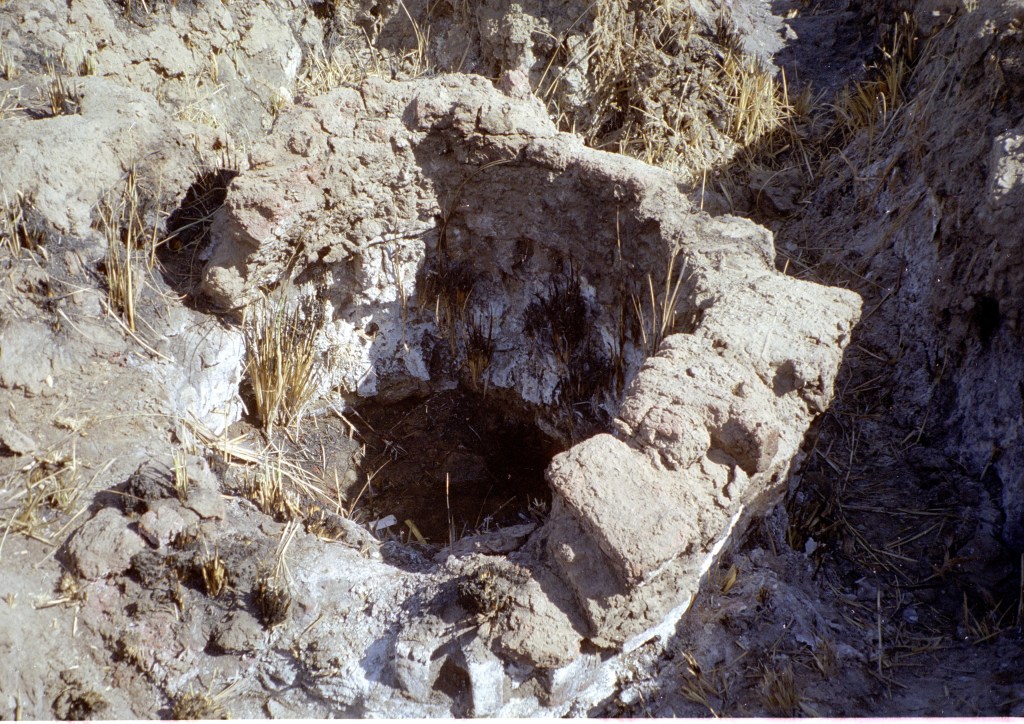
Western drain in baked brick was excavated in 1969 by Fairservis, but crumbles in 2000 from salts and ground moisture (Walters).
This drain in baked brick is later in ancient life of this temple-town site (Saite, Ptolemaic or Roman). It was found by Dr. Walter Fairservis, Hierakonpolis excavations in 1969, and has become a husk of salts by 2000. One may argue that to re-bury the drains would conserve the drain, but porosity of the brick draws moisture and salts, and speeds damage, whether above or in capillary moisture.
Flushing the site and fields with active drainage, along with deeper agricultural drains and exit canal, will improve the land and groundwater. A big and worthy endeavor!

2005, new growth in wet quadrants is a positive result from pumping tests at Temple-Town Hierakonpolis, 2000-2003.
 hierakonpolis.com